Toyota Highlander 2015 Manual: A Comprehensive Guide
This guide provides detailed information for owners of the 2015 Toyota Highlander, focusing on operation and maintenance. Access the official owner’s manual online for comprehensive details. Explore features, specifications, and troubleshooting tips to maximize your Highlander experience, ensuring safe and efficient driving.
The 2015 Toyota Highlander represents a compelling blend of practicality, reliability, and family-focused design within the mid-size SUV segment. This guide specifically caters to owners – and prospective owners – interested in a thorough understanding of their vehicle, with a particular emphasis on the intricacies of the manual transmission models available that year. While Toyota has increasingly focused on automatic transmissions, the 2015 Highlander offered a manual option, appealing to drivers who prefer greater control and engagement.
This comprehensive resource aims to demystify the Highlander’s features, from its core mechanical components to its advanced technological offerings. We will delve into the specifics of the available trim levels, helping you identify the nuances of your particular model. Furthermore, we’ll provide clear instructions on locating and downloading the official 2015 Highlander owner’s manual – a vital resource for detailed information and warranty specifics. Understanding your vehicle is paramount to safe and enjoyable driving, and this guide is designed to empower you with the knowledge you need.
Beyond the basics, we’ll explore the Highlander’s engine options, with a dedicated focus on the manual transmission system. This includes detailed explanations of operation, shifting techniques, and a preventative maintenance schedule to ensure longevity and optimal performance. Finally, we’ll address common issues and provide troubleshooting guidance, alongside valuable resources for owners and repair professionals.
Understanding the 2015 Highlander Trim Levels
The 2015 Toyota Highlander was offered in a variety of trim levels, each catering to different needs and budgets. Understanding these distinctions is crucial for identifying the specific features and capabilities of your vehicle, particularly concerning the availability of a manual transmission. While not widely available, the manual transmission option was primarily found on the base Highlander model.
The core trims included the Highlander, LE, XLE, and Limited. The base Highlander offered essential features and represented the most affordable entry point. The LE added conveniences like enhanced audio and alloy wheels. Stepping up to the XLE brought leather upholstery, heated seats, and a more refined interior. The Limited trim boasted premium features such as navigation, a rear entertainment system, and advanced safety technologies.
For manual transmission enthusiasts, it’s important to note that this option was generally paired with the 2.7-liter four-cylinder engine. Higher trims typically featured the more powerful 3.5-liter V6 engine exclusively with an automatic transmission. Therefore, if you’re seeking a 2015 Highlander with a manual gearbox, focusing on the base model is your best bet. Confirming the transmission type via the vehicle’s VIN or a physical inspection is always recommended.
Locating and Downloading the 2015 Highlander Owner’s Manual
Accessing your 2015 Toyota Highlander’s owner’s manual is essential for understanding its features, operation, and maintenance requirements. Fortunately, Toyota provides several convenient methods for locating and downloading a digital copy. The official Toyota website is the primary resource, offering a comprehensive library of owner’s manuals for various models and years, including the 2015 Highlander.
To find your manual, navigate to Toyota’s owner’s manual section and select “Toyota Highlander” followed by the model year “2015”. You can then download the PDF file directly to your computer, tablet, or smartphone for offline access. Alternatively, several third-party websites archive vehicle owner’s manuals, but always verify the source’s reliability to ensure you’re obtaining an accurate and legitimate document.
The owner’s manual contains vital information regarding safety features, driving instructions, maintenance schedules, and troubleshooting tips. Having a readily available digital copy allows you to quickly reference important details whenever needed, enhancing your ownership experience and ensuring proper vehicle care. Car Owners Manuals Online is also a useful resource.
Key Features and Specifications of the 2015 Highlander
The 2015 Toyota Highlander offered a compelling blend of practicality, comfort, and reliability, making it a popular choice for families. Key features included three-row seating, accommodating up to eight passengers, and a spacious cargo area for ample storage. Available trim levels ranged from the base LE to the luxurious Limited Platinum, each offering a unique set of amenities.
Under the hood, the Highlander primarily featured a 3.5-liter V6 engine producing 270 horsepower, paired with an automatic transmission. Front-wheel drive was standard, with available all-wheel drive for enhanced traction. Standard equipment typically included a rearview camera, Bluetooth connectivity, and a 6.1-inch touchscreen display.
Higher trims boasted upgrades such as leather upholstery, a premium audio system, navigation, and advanced safety technologies. Overall dimensions were substantial, providing a comfortable ride and confident handling. The 2015 Highlander’s specifications positioned it as a strong contender in the mid-size SUV segment, prioritizing both passenger well-being and functional versatility.
Safety Features in the 2015 Toyota Highlander
The 2015 Toyota Highlander prioritized passenger safety, incorporating a comprehensive suite of features designed to prevent accidents and protect occupants. Standard safety equipment included anti-lock brakes, stability control, traction control, and a full complement of airbags, including front, side, and curtain airbags.
A rearview camera was standard across all trims, aiding in low-speed maneuvering and enhancing visibility. Higher trims offered additional safety technologies such as blind-spot monitoring, rear cross-traffic alert, and lane departure alert, providing drivers with increased awareness of their surroundings.
Toyota’s Star Safety System, a suite of six active safety features, was also standard, further enhancing vehicle stability and control. Crash test ratings from the National Highway Traffic Safety Administration (NHTSA) and the Insurance Institute for Highway Safety (IIHS) were generally positive, demonstrating the Highlander’s robust safety performance. These features collectively contribute to a secure driving experience for both driver and passengers.
Understanding the Highlander’s Engine Options (Manual Transmission Focus)
While the 2015 Toyota Highlander was predominantly offered with automatic transmissions, a limited number of base models featured a six-speed manual transmission option, primarily in select international markets. The standard engine paired with the manual was a 2.7-liter four-cylinder engine producing 185 horsepower and 184 lb-ft of torque. This configuration prioritized fuel efficiency over outright performance.
A 3.5-liter V6 engine, generating 270 horsepower and 248 lb-ft of torque, was available but exclusively with an automatic transmission. The hybrid powertrain, combining a 3.5-liter V6 with an electric motor, was also solely offered with an automatic transmission. For owners specifically seeking a manual Highlander, understanding the nuances of the 2.7-liter engine and its associated transmission is crucial for proper operation and maintenance.
The manual transmission provided a more engaging driving experience, appealing to drivers who preferred greater control over gear selection. However, it generally resulted in slightly lower fuel economy compared to the automatic variants.
Detailed Explanation of the Manual Transmission System
The 2015 Toyota Highlander’s six-speed manual transmission is a fully synchronized system designed for smooth and precise gear changes. It utilizes double-cone synchronizers on first and second gear, enhancing shift quality and reducing wear. The transmission case is constructed from a robust aluminum alloy, balancing strength and weight reduction. Internal gear ratios are carefully calibrated to optimize engine performance and fuel efficiency across a range of driving conditions.

The shift linkage employs a cable-operated system, providing a direct and responsive feel to the driver. Proper lubrication with the specified gear oil is critical for maintaining optimal performance and preventing premature wear of internal components. The clutch system features a hydraulically operated release bearing, ensuring consistent engagement and disengagement. Regular inspection of the clutch disc and pressure plate is recommended to identify potential issues before they escalate.
Understanding the transmission’s internal workings is key to effective troubleshooting and maintenance, ensuring longevity and reliable operation.
Operating the Manual Transmission: Shifting Gears
To initiate a gear change in your 2015 Toyota Highlander, fully depress the clutch pedal and simultaneously move the shift lever to the desired gear position. Ensure a smooth and deliberate motion, avoiding forceful or abrupt shifts. Release the clutch pedal gradually while simultaneously applying gentle pressure to the accelerator. Matching engine speed to road speed during downshifts (heel-toe technique recommended for advanced drivers) minimizes jerking and maximizes control.

Avoid “speed shifting” or rapidly changing gears, as this can cause excessive wear on the synchronizers. When stopping, depress the clutch pedal fully and shift into neutral to prevent stalling. Utilize engine braking by downshifting before entering corners or decelerating, enhancing control and reducing brake wear. Be mindful of the gear indicator on the instrument panel to confirm the selected gear.
Practice smooth and coordinated clutch and throttle control for optimal driving experience and transmission longevity.
Maintenance Schedule for the Manual Transmission
Regular maintenance is crucial for the longevity of your 2015 Toyota Highlander’s manual transmission. Inspect the transmission fluid level every 30,000 miles, and top off if necessary with the manufacturer-recommended fluid type. A complete fluid change is recommended every 60,000 miles, or sooner if the fluid appears dark or contaminated. Check the clutch master and slave cylinders for leaks every 30,000 miles.
Inspect the clutch disc for wear during fluid changes, especially if you experience slippage. Lubricate the shift linkage periodically to ensure smooth gear changes. Address any unusual noises or vibrations promptly, as they may indicate internal damage. Ensure proper alignment of the transmission when performing any related repairs.
Following this schedule will help prevent costly repairs and maintain optimal performance of your Highlander’s manual transmission, ensuring a reliable driving experience for years to come.
Troubleshooting Common Manual Transmission Issues
Difficulty shifting gears can stem from low or contaminated transmission fluid, a worn clutch, or issues with the shift linkage. Grinding noises during shifts often indicate a worn synchronizer or clutch disc. Clutch slippage, especially under acceleration, suggests a worn clutch. A stuck gear can be caused by a damaged synchronizer or internal transmission components.
If you experience these issues, first check the transmission fluid level and condition. Inspect the clutch cable or hydraulic system for proper adjustment and leaks. Avoid forcing gears, as this can cause further damage. Listen for unusual noises that may pinpoint the source of the problem.
For complex issues, consult a qualified mechanic. Ignoring these symptoms can lead to more extensive and costly repairs. Regular maintenance, as outlined in the maintenance schedule, can help prevent many of these problems.
Understanding the Highlander’s Fuel System
The 2015 Toyota Highlander’s fuel system is designed for efficient and reliable operation. It utilizes a multi-port fuel injection system, delivering fuel directly to each engine cylinder for optimal combustion. The fuel tank capacity varies depending on the trim level, typically ranging around 19.2 gallons. A fuel pump, located within the tank, delivers fuel to the engine under pressure.
The system includes a fuel filter to remove contaminants, ensuring clean fuel reaches the engine. Regular fuel filter replacement is crucial for maintaining optimal performance. The engine control unit (ECU) monitors various sensors to precisely control fuel delivery, optimizing fuel efficiency and reducing emissions. Using the correct octane fuel, as specified in the owner’s manual, is essential.
Be aware of warning signs like decreased fuel economy or difficulty starting, which could indicate a fuel system issue. Proper maintenance, including fuel filter changes, will help ensure the longevity and efficiency of the Highlander’s fuel system.
Interior Features and Controls
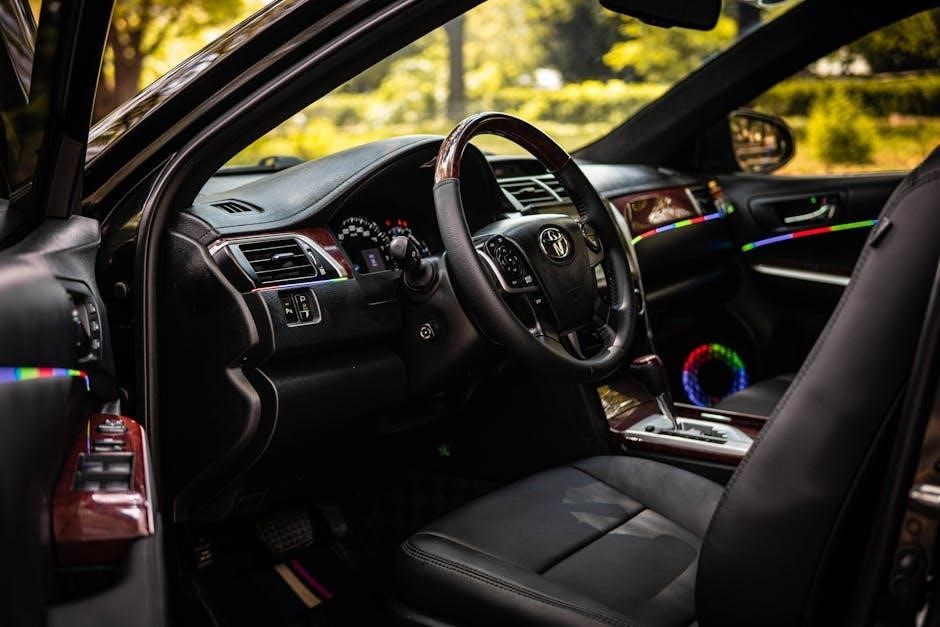
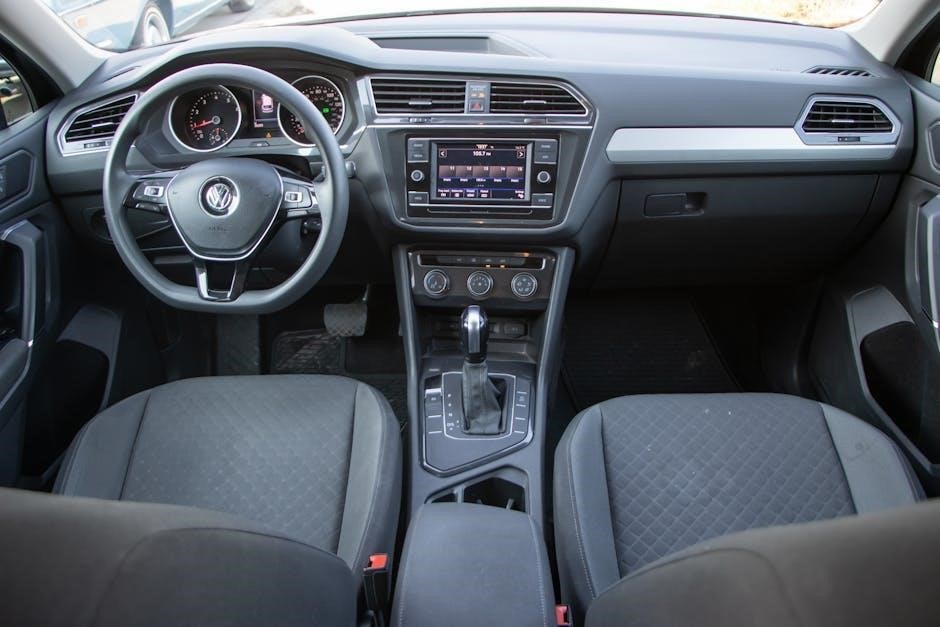
The 2015 Toyota Highlander’s interior prioritizes comfort and functionality. Controls for climate, audio, and vehicle settings are intuitively placed on the center console and steering wheel. Seating configurations vary, with options for seven or eight passengers, featuring adjustable headrests and comfortable upholstery. The dashboard layout provides clear visibility of essential information.
Key interior controls include the multi-information display, offering data like fuel economy and trip information. Power windows, door locks, and mirrors are standard features. Higher trim levels boast features like leather seats, heated front seats, and a power liftgate. Understanding the location and operation of these controls enhances the driving experience.
Familiarize yourself with the placement of safety features like airbags and seatbelt pretensioners. The Highlander offers ample storage compartments throughout the cabin, including a spacious glove box and door pockets. Proper use of these features contributes to a safe and enjoyable journey.
Audio and Infotainment System Guide
The 2015 Toyota Highlander’s audio system provides entertainment and connectivity. Standard features typically include an AM/FM radio, CD player, and auxiliary input jack. Higher trim levels offer upgrades like a premium JBL sound system and a touchscreen display. Bluetooth connectivity allows for hands-free calling and audio streaming from compatible devices.
The infotainment system controls audio settings, navigation (if equipped), and vehicle information. Users can adjust volume, tune into radio stations, and select audio sources using the system’s interface. Navigation systems, when present, offer turn-by-turn directions and points of interest. Familiarize yourself with the touchscreen controls or physical buttons for easy operation.
Understanding the system’s menus and settings allows for customization of the audio experience. Explore features like equalizer settings and sound presets to optimize audio quality. Proper use of the audio and infotainment system enhances the driving experience, providing entertainment and convenience on the road.
Navigation System Operation (If Equipped)
If your 2015 Toyota Highlander is equipped with a navigation system, it provides turn-by-turn directions and location-based services. The system utilizes a map database and GPS technology to determine your vehicle’s position and guide you to your desired destination. Initial setup requires entering your preferences, such as voice guidance language and map display settings.
To input a destination, you can use the touchscreen to enter an address, point of interest, or intersection. Alternatively, voice recognition allows for hands-free destination entry. The system calculates the optimal route based on your preferences, considering factors like distance, traffic conditions, and road closures. During navigation, the system provides visual and audible cues to guide you along the route.
Regularly updating the map database ensures accurate and up-to-date information. Familiarize yourself with the system’s features, such as route recalculation, traffic avoidance, and point-of-interest search, to maximize its benefits. Proper operation of the navigation system enhances travel convenience and reduces the risk of getting lost.
Tire Information and Maintenance
Maintaining proper tire condition is crucial for safety and optimal performance of your 2015 Toyota Highlander. Refer to the vehicle’s tire placard, located on the driver’s side doorjamb, for the recommended tire size and inflation pressure. Always inflate tires to the specified pressure when they are cold, as pressure increases with heat. Regularly check tire pressure – at least once a month – using a reliable gauge.
Inspect tires for wear and damage, including cuts, bulges, and uneven tread wear. Rotate tires according to the recommended schedule outlined in the owner’s manual to promote even wear and extend tire life. Ensure proper wheel alignment to prevent premature or uneven tire wear. The tread depth should be monitored; replace tires when they reach the minimum legal tread depth.
Using tires with the correct load rating and speed rating is essential for safe operation. Avoid mixing tires of different sizes or types. Proper tire maintenance contributes to improved handling, braking performance, and fuel efficiency, ultimately enhancing your driving experience and safety.
Basic Troubleshooting Guide for Common Issues
Encountering minor issues with your 2015 Toyota Highlander is common. If the engine fails to start, check the battery connections, fuel level, and ensure the ignition switch is fully engaged. For a malfunctioning audio system, verify the volume, mute function, and check the fuse box. If the navigation system isn’t responding, try a system reset as detailed in the owner’s manual.
Concerning unusual noises, identify the source – brakes, engine, or suspension – and consult a qualified mechanic if the problem persists. Regarding warning lights, refer to the owner’s manual for specific meanings and recommended actions. A flickering headlight often indicates a loose bulb or electrical issue; inspect and replace if necessary.
Remember to consult the comprehensive owner’s manual for detailed troubleshooting steps and safety precautions. For more complex issues, or if you are uncomfortable performing repairs yourself, seek assistance from a certified Toyota technician. Prioritize safety and avoid attempting repairs beyond your skill level.
Resources for Toyota Highlander Owners and Repair
Toyota provides a wealth of resources for 2015 Highlander owners. The official Toyota Owners website (owners.toyota.com) offers access to your vehicle’s owner’s manual in digital format, maintenance schedules, and warranty information. For quick reference, numerous online forums dedicated to Toyota vehicles, including Highlander-specific groups, provide a platform for sharing experiences and seeking advice from fellow owners.
When professional repair is needed, locate authorized Toyota dealerships and certified service centers through the Toyota website’s dealer locator. These facilities employ trained technicians with expertise in Toyota vehicles. Additionally, websites like Car Owners Manuals Online (carownersmanuals.online) offer downloadable owner’s manuals and technical documentation.
Consider utilizing Toyota’s parts website for genuine replacement parts, ensuring compatibility and quality. Remember to always prioritize safety and consult qualified professionals for complex repairs. Exploring these resources empowers Highlander owners to maintain and enjoy their vehicle for years to come.